Go Norsk Friluftsliv to main content

Nature as a Learning Arena

This initiative will ensure that educators in schools and kindergartens will gain the knowledge they need to be able to use nature as an extended classroom, so that outdoor school becomes a larger part of the children's school life.

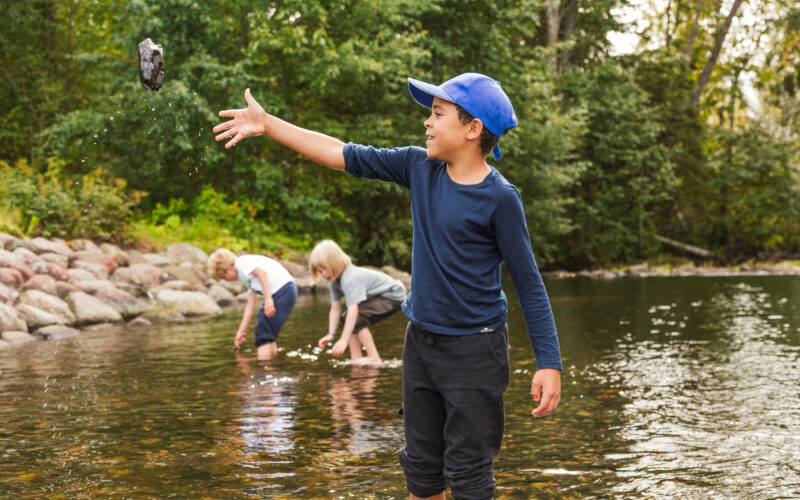
Photo: Paulina Cervenka

Video about the initiative

Get a glimpse of how we work in practice —>

"Through the initiative Nature as a Learning Arena, Norsk Friluftsliv (The Norwegian Association for Outdoor Organisations) wants all students to experience community, well-being, joy of learning and mastery out in nature's classrooms," says Stein Yngve Andersen, project manager for Nature as a Learning Arena

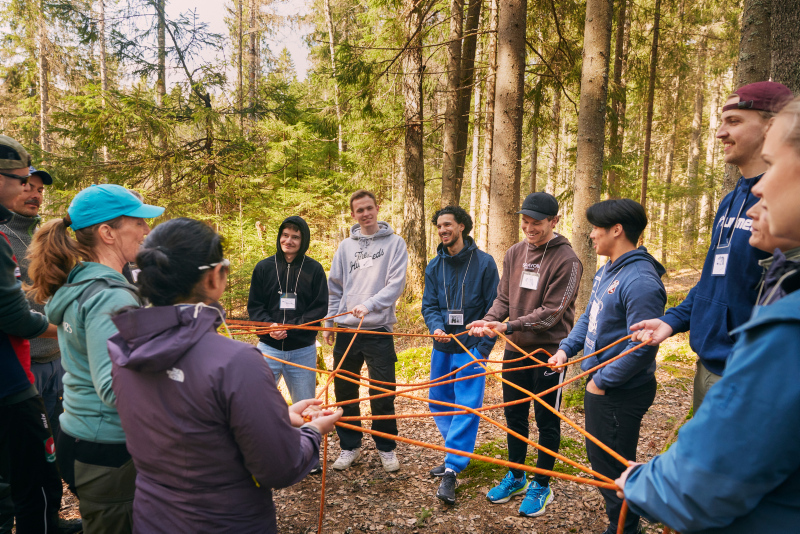
Project manager for the initiative, Stein Yngve Andersen, during a gathering for teacher students at OsloMet, at Sæteren farm in 2024. Photo: Paulina Cervenka

An initiative from Norsk Friluftsliv (The Norwegian Association for Outdoor Organisations)

Since 2018, Norsk Friluftsliv (The Norwegian Association for Outdoor Organisations) has worked to ensure that more children and young people can use nature as a learning arena. From 2024, the initiative received a solid boost, which now makes it possible to work for outdoor school in kindergartens, primary and secondary schools, after-school care and teacher education.

In order to achieve the goal of more children and young people using nature as a learning arena, the initiative is threefold:

  1. Projects in higher education
  2. Projects in outdoor recreation
  3. Projects in education and child development

Each focus area has several projects, which together will have a broad impact for more outdoor school and practical learning for all children in kindergartens, schools and after-school care.

National and international research is unanimous that nature as a learning arena is one of the most important starting points for children's learning, development and formation. By using nature as a learning arena, teaching is facilitated that promotes the joy of learning, motivation, mastery and belonging for all children.

The mandate for this work is laid down in the Ministry of Climate and Environment's Action Plan for Outdoor Recreation from 2018. The project "Outdoor recreation in schools" worked on the basis of the objectives described in this action plan and has been the focal point between organisations working at the intersection of nature, outdoor recreation and education.

In 2024, Norsk Friluftsliv (The Norwegian Association for Outdoor Organisations) entered into a partnership with the Gjensidige Foundation based on theme area 3 of the Nature Joy Initiative, Nature as a Learning Arena. The project "Outdoor life in school" then had a golden opportunity to further develop into the focus area "Nature as a learning arena". A move that made it possible to reach all children in the country's kindergartens, schools and after-school care.

This initiative is a long-awaited and important further development, which is more in line with how nature as a learning arena is promoted in the curriculum, the Knowledge Promotion Reform from 2020 and the framework plan for kindergartens from 2018. Furthermore, the focus area now also meets the Ministry of Health and Care Services' Public Health Report to a greater extent, by promoting nature and especially local nature as important for safeguarding the population's mental and physical health.

Access to nature in childhood helps to influence children's identity and belonging to their local community. By facilitating teaching and training in nature and with nature as a resource, children experience social learning in learning communities through positive relationship work. Which in turn strengthens their social immune system. On the other hand, teaching in, and with nature as a resource, strengthens academic learning through physically active learning and in-depth learning across subjects.
1. Projects in higher education

The two projects in higher education aim to strengthen outdoor education as a didactic method (the teaching of teaching) in Norwegian education.

The research project NArENA is a four-year research project led by Norwegian Outdoor Life and the University of Stavanger. It is one of the most comprehensive studies in outdoor school in Norway. The project will result in a textbook in outdoor school didactics, which will be a key tool for both new and experienced teachers.

Outdoor School Didactics in Teacher Education aims to integrate outdoor education into primary and lower secondary teacher education at five universities. The project involves planning outdoor school in course descriptions, competence enhancement for teacher students and collaboration with outdoor life organizations. This is a direct measure to meet the government's ambition of a more practical school.

Student teachers receive practical instruction in how to take their children outside and use nature as a classroom. Photo: Paulina Cervenka

More about projects in higher education

Main objectives:  

Research and the research base in Norway will be strengthened to promote outdoor school as a didactic method in childhood and the education sector.

Sub-goals:  

  • Increased awareness among the Ministry of Education and Research, the Ministry of Climate and Environment and the Ministry of Health and Care Services related to the value, relevance and need for increased national research on outdoor education.
  • The teacher education institutions see that a focus on outdoor school didactics in the training of new teachers is necessary to meet the government's desire for a more practical school.

The research project NArENA is a four-year research project led by Norwegian Outdoor Life and the National Centre for Learning Environment and Behavioural Research at the University of Stavanger. The research project is one of the most comprehensive research projects on outdoor school to date. The textbook produced in outdoor school didactics based on the empirical data from the research project will be the cornerstone in the education of future teachers and the continuing education of teachers in school.

In the research project, researchers from the University of Stavanger, Western Norway University of Applied Sciences, the University of Agder, the University of Tromsø and OsloMet are collaborating in the research project. Overall, the research project will develop new research-based knowledge about practice in outdoor school in Norway that is relevant to policy development, public administration, teacher education, the field of practice and the individual student.

Main objectives:  

Several teacher education institutions implement outdoor school didactics in primary and lower secondary teacher education and teacher education for practical aesthetic subjects.

Sub-goals:  

  • Several student teachers (GLU and LUPE) gain competence in outdoor school didactics and know which outdoor life organizations can support them in using nature as a learning arena.
  • The teacher education institutions are investing in outdoor school didactics in the training of new teachers.
  • Strengthened cooperation between the outdoor recreation organizations and the university/college sector.

The project Outdoor School Didactics in Teacher Education is a collaborative project between Norwegian Outdoor Life and the teacher education at 5 universities. The teacher education at the universities plans outdoor school in the course descriptions and contributes to theory and competence enhancement based on outdoor school didactics for selected student cohorts. Furthermore, six outdoor life organizations assist in the implementation of six seminar days for the selected student cohorts.

The focus on outdoor school didactics in the form of theory, practice and reflection contributes to incorporating outdoor school didactics into primary and lower secondary education at 5 universities. The project Outdoor School Didactics in Teacher Education is a direct response to the challenges highlighted in White Paper 34 – A more practical school, and will support the Government in its work to develop a national programme for a more practical school.

2. Projects in outdoor recreation

Aims to strengthen nature as an educational resource in the childhood and education sector.

The stimulation scheme Nature as a Learning Arena will support organisations' work aimed at kindergartens, schools and after-school care. The scheme will strengthen the organisations' relevance in the education sector and help to increase children's joy of learning, mastery and environmental awareness through practical teaching in nature.

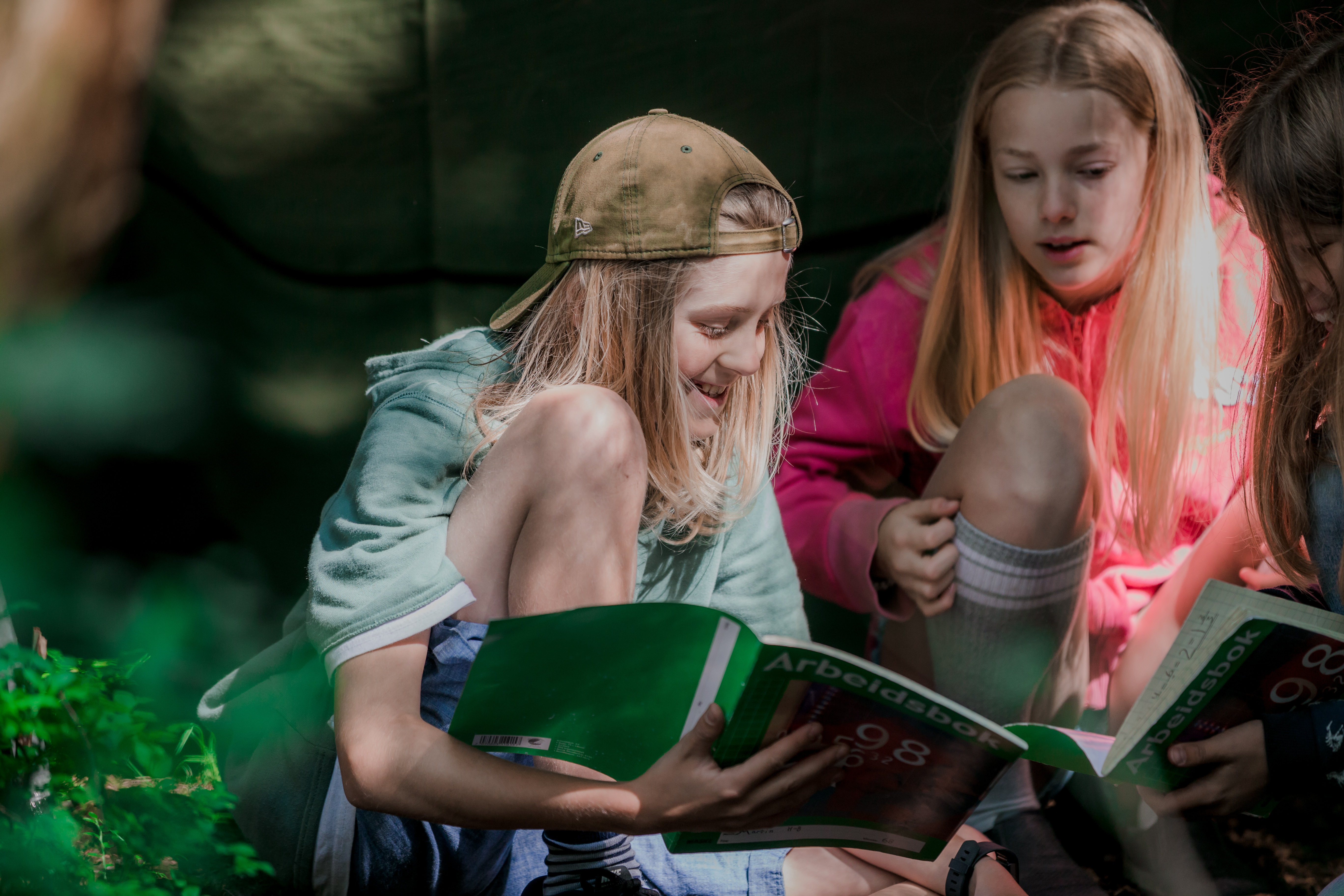
Pupils have outdoor education in mathematics. Photo: Sondre Formo Lindheim /AVIA Produksjon AS


More about the projects in outdoor recreation

Main objectives: 

Organisations must see that investment in good projects and systematic work towards childhood and education strengthens the organisations' relevance and visibility in the sector.

Sub-goals: 

  • The organisations are increasing their focus on projects that safeguard nature as a learning arena in kindergartens, schools and after-school care.
  • Strengthened cooperation between the organisations, kindergartens, schools and after-school care.
  • Physical and digital teaching materials, based on nature as a learning arena, are being used to a greater extent by kindergartens, schools and after-school care through increased distribution and activity on digital platforms.

The stimulation scheme Nature as a Learning Arena will manage NOK 30 million for systematic and sustainable work towards childhood and the education sector. The organisations that receive stimulus funding have anchored their projects in the curriculum Knowledge Promotion 2020 and/or the Framework Plan for Kindergartens 2018. The projects contribute to competence-enhancing work among staff and/or children in educational institutions with the intention that more children and young people will use nature as a learning arena. The projects reflect the organisations' distinctive character while at the same time meeting the need in the childhood and education sector for more practical teaching in natural surroundings. The funds from the stimulus scheme are intended to strengthen the projects so that they have a larger catchment area while at the same time safeguarding operations through targeted work with funds from the public and private sectors. The projects that receive funding from the stimulation scheme safeguard children's enjoyment of nature and environmental awareness, identity and belonging, the joy of learning and mastery in encounters with nature as a learning arena.

Below are two teaching plans, all of which aim to strengthen children's and young people's enjoyment of nature, environmental awareness and knowledge of sustainable outdoor life. All three are free for anyone to use, and possibly download, on our website.

Kampen om Huldreskogen ("The Battle for Huldra Forest") is an interdisciplinary educational program for preschool children and primary school, where the joy of nature and environmental awareness are conveyed through legends and fairy tales. This is a free educational program, including a mini-musical, and is supported by outdoor recreation organizations that develop their own learning resources.

Allemannsretten ("The right to roam)" is a digital teaching program for the middle school that gives the students knowledge about the right to roam and the duty to roam. Through theory, interactive elements and practical exercises, the pupils will learn how important the right to roam is for outdoor life and cultural heritage in Norway. This is free and open to everyone on our website.

Kampen om Huldreskogen

The Huldre children Einar and Eida, from the teaching program "The Battle for Huldra Forest" (Norwegian:  "Kampen om Huldreskogen")

More about the teaching resources

Main objectives:  

More children and young people will experience the joy of nature and acquire environmental awareness.

Sub-goals:  

  • The teaching plan must be familiar to all children in preschool and primary school.
  • Children and young people should become environmentally conscious and experience the joy of nature.
  • Children and young people will get to know their local nature better in the immediate vicinity of kindergartens/schools.
  • Educators must implement the teaching plan in their annual cycles.
  • School leaders/kindergarten leaders must set aside time for the teaching plan in the planning and development work at the school/kindergarten.

The Battle for Huldre Forest (Kampen om Huldreskogen) is an interdisciplinary educational program that promotes the joy of nature and environmental awareness for preschool children and students in primary school. The battle for Huldreskogen is based on legends and fairy tales about the Huldre people, who are part of Norwegian cultural heritage. The project is rooted in the curriculum Knowledge Promotion 2020 and the framework plan for kindergarten. The teaching programme will be anchored in kindergartens, schools and after-school care through an introductory booklet distributed free of charge to all the country's kindergartens and schools. Selected outdoor recreation organizations receive funding to develop their own teaching resources within the same teaching program. In this way, we ensure that outdoor life is also known to children of preschool and primary school age. Furthermore, an interdisciplinary teaching program will be produced in the form of a mini-musical. All teaching materials that produce must be open and free to everyone.

Main objectives:  

More children and young people should be aware of the right to roam and the values of trackless travel. 

Sub-goals:  

  • The teaching plan must be familiar to all children in the middle school.
  • Children and young people must know the right to roam and exercise traceless travel.
  • Children and young people will get to know their local nature better up to two km from their school.
  • Educators must implement the teaching plan in their annual cycles.
  • School leaders must set aside time for the teaching plan in the planning and development work at the school.

The right to roam (Allemannsretten) is a digital teaching program with the theme of the right to roam and the duty of public access. The teaching programme promotes the right to roam as the basis for outdoor recreation in Norway, and that travel in nature is part of the Norwegian cultural heritage. The target group for the teaching programme is pupils in the middle school. Knowledge about the right to roam is defined as competence objectives in the curriculum Kunnskapsløfte 2020 and in the action plan for outdoor recreation 2018. The teaching plan provides for theoretical, interactive and practical training in order for the pupils to gain deeper learning in the encounter with the right to roam as a topic. The teaching programme will be available on the website of the focus area Nature as a Learning Arena, free of charge and available to everyone.